

Introduction
Modern industries depend on electrical systems that can distribute, monitor, control, and protect power efficiently. At the center of many of these systems are electrical control panels.
A properly designed control panel helps industries manage electrical equipment safely while improving operational efficiency and system reliability.
What Is an Electrical Control Panel?
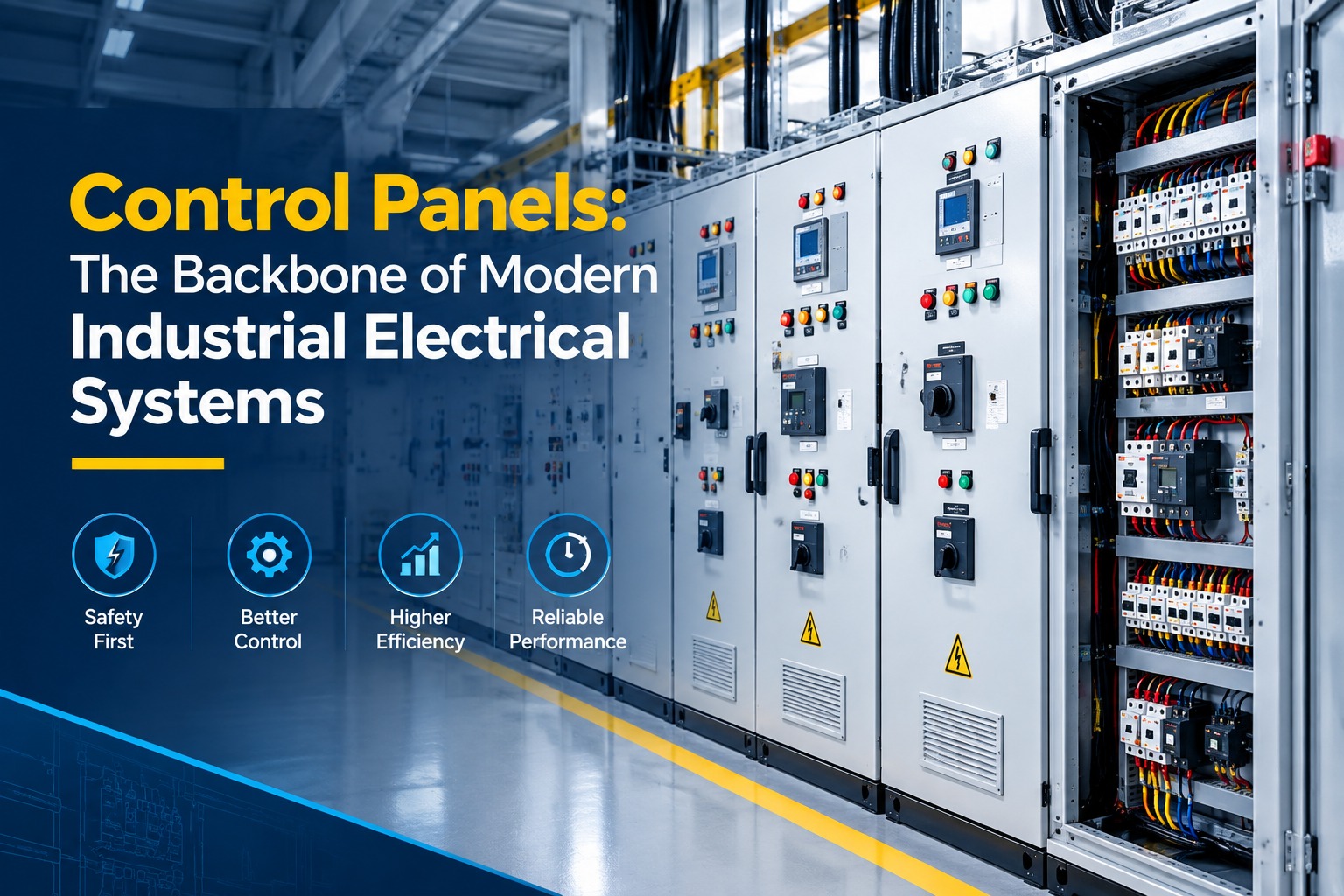
An electrical control panel is an enclosure containing electrical components used to control and distribute electrical power and operate industrial equipment.
Depending on the application, control panels can incorporate circuit breakers, contactors, relays, meters, controllers, drives, protection devices, and automation components.
Different Types of Panels
Industrial applications require different types of panels depending on their electrical and operational requirements.
Some commonly used panels include:
MCC Panels
Motor Control Centre panels are designed for controlling and protecting industrial motors.
PCC Panels
Power Control Centre panels are used for electrical power distribution and control.
AMF Panels
Automatic Mains Failure panels help manage the transition between mains power and generator power.
APFC Panels
Automatic Power Factor Correction panels help improve power factor and optimize electrical efficiency.
Automation Panels
These panels integrate PLCs, drives, and control systems for automated industrial processes.
ATS / Changeover Panels
These are used to manage power sources and provide controlled changeover between supplies.
Why Panel Design Matters
A control panel should be designed according to the electrical load, operating environment, protection requirements, future expansion, and application.
Poorly designed panels can result in overheating, equipment failure, downtime, and safety risks.
A professionally engineered panel provides:
- Better electrical protection
- Organized power distribution
- Improved system monitoring
- Reliable equipment operation
- Easier maintenance
- Scope for future expansion
From Design to Fabrication
Control-panel manufacturing involves multiple stages, including engineering design, component selection, sheet-metal fabrication, assembly, wiring, testing, and final inspection.
Every stage contributes to the reliability and performance of the finished panel.
Conclusion
Control panels are an essential part of modern industrial electrical infrastructure. The right design and quality manufacturing can significantly improve system reliability, safety, and operational efficiency.
DRJ POWER TECH specializes in control panel manufacturing and electrical engineering solutions designed to meet diverse industrial requirements.
Leave a Reply